
August 8, 2026
Fleet Wraps vs. Digital Ads: Which Delivers Better ROI for Your Business?
Fleet wraps provide persistent local visibility, while digital ads offer precise targeting and faster measurement. Most businesses should compare both by leads.
By Print Wave
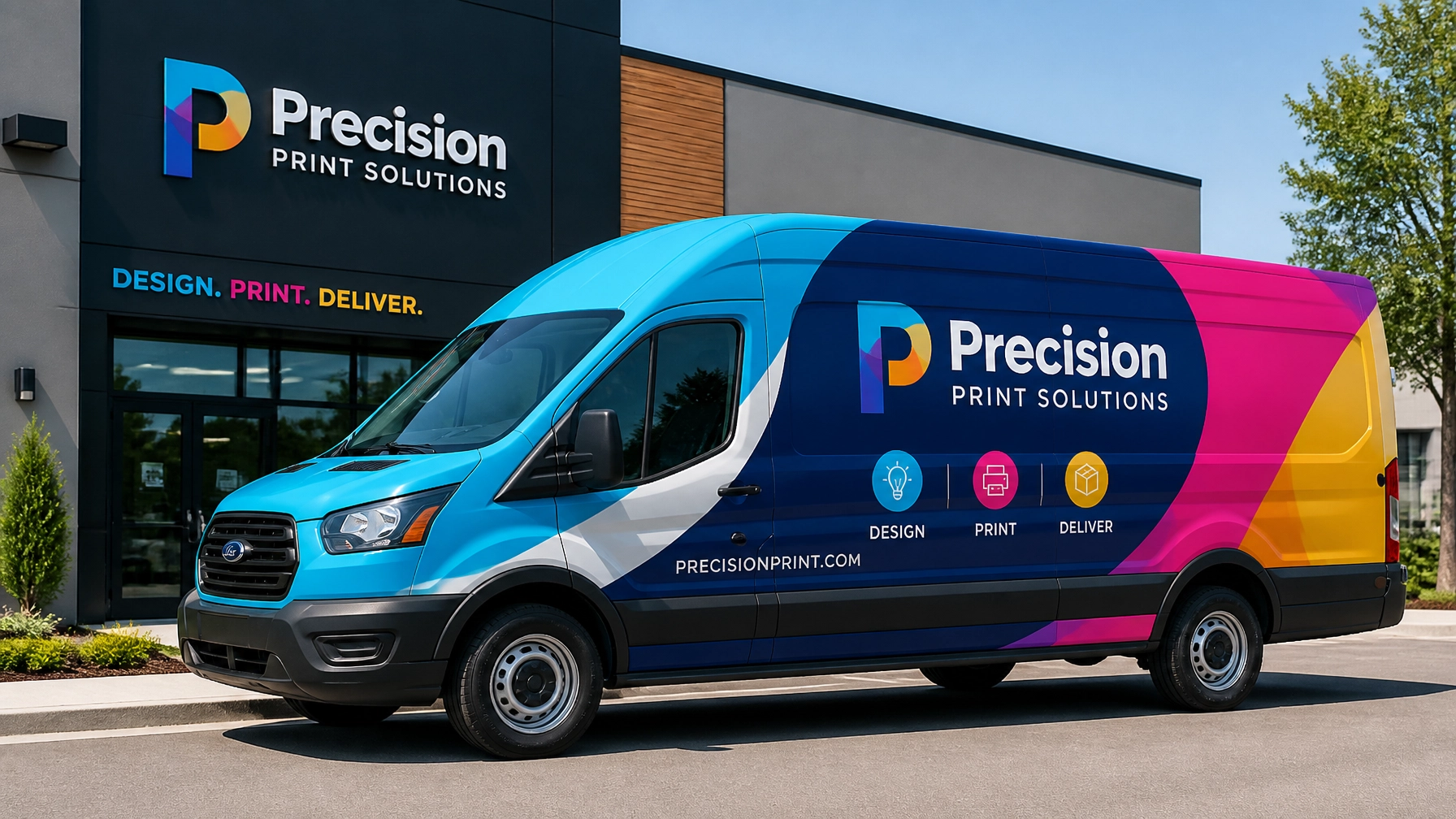
Fleet wraps and digital ads solve different marketing problems. Vehicle graphics provide persistent visibility wherever company vehicles already travel or park. Digital ads provide precise audience targeting, quick testing, and measurable actions. A local business often gets the strongest plan by using the fleet for recognition and digital campaigns for demand capture, then measuring both against qualified leads and revenue.
There is no trustworthy universal answer to which channel has the better return. The result depends on vehicle routes, message quality, installed cost, ad competition, landing-page performance, sales follow-up, and how attribution is configured.
Compare the Channels by Job, Not by Headline
| Decision factor | Fleet graphics | Digital advertising |
|---|---|---|
| Primary strength | Persistent local visibility | Targeting and immediate testing |
| Audience control | Determined by routes and parking | Determined by keywords, audiences, geography, and bids |
| Ongoing spend | Maintenance and eventual replacement | Continual campaign budget and management |
| Measurement | Requires dedicated attribution | Platform and site events can be tracked directly |
| Message depth | Short, memorable message | Detailed offer matched to search intent |
| Timing | Visible whenever the vehicle is in use | Can be scheduled, paused, and changed quickly |
A wrap is not a substitute for a sales funnel, and an ad is not a durable physical asset. Compare each channel according to what it is expected to do.
Build a Defensible Fleet-Graphics Cost Model
Avoid generic cost-per-impression claims unless you have reliable route and visibility data for your own vehicles. Instead, begin with costs you can document:
- Design and file preparation.
- Printing, laminate, installation, and removal scope.
- Vehicle cleaning and preparation.
- Time out of service.
- Expected maintenance and replacement planning.
- Number of vehicles and body styles.
Then define the useful exposure: service neighborhoods, job sites, commuter routes, parking locations, events, and customer visits. A plumbing van that spends each day in the target service area has a different marketing role from a vehicle stored indoors or driven outside the market.
The design also determines whether exposure is useful. A readable company name, primary service, and memorable contact path usually matter more than filling every panel with a service list.
Explore fleet graphics and commercial vehicle wraps when comparing coverage options.
Measure Digital Ads With Business Outcomes
Digital advertising makes more data available, but platform clicks and impressions are not the final result. Track:
- Valid calls and quote submissions.
- Qualified opportunities.
- Orders and gross profit where available.
- Cost per qualified lead.
- Landing-page conversion rate.
- Search terms or audiences that produced useful inquiries.
- Response time and sales follow-up outcome.
Ad costs change with competition, location, season, targeting, and creative. Use current account data rather than an industry CPM copied from another market. A campaign that produces fewer but better-fit commercial-print buyers may be more valuable than one that produces inexpensive low-intent clicks.
Create Attribution for Vehicle-Generated Leads
Vehicle graphics need a deliberate measurement path. Practical options include:
- A short, memorable landing URL used only on the fleet.
- A QR destination for people scanning while the vehicle is safely parked.
- A trackable call route or extension.
- A lead-source question on phone and quote intake.
- Separate identifiers for different markets or vehicle groups.
Do not make a QR code the only call to action on a moving vehicle. The business name and service should remain understandable without requiring a scan.
Review lead quality monthly and compare it with where vehicles operated. Attribution will not be perfect, but a consistent process is more useful than assuming every local direct visit came from the fleet.
Use Both Channels as One Campaign
Fleet graphics can establish familiarity before a prospect searches. Digital ads can then answer the specific need and send that prospect to a focused landing page. Keep the brand, offer, phone number, and service language consistent across both.
For example, a Dayton-area contractor could:
- Use clean truck lettering to establish the company name and core service.
- Run search ads only in the actual service area.
- Send ads to a page that matches the searched service.
- Track calls and quote forms with the same lead-quality definitions.
- Review which neighborhoods, keywords, and vehicle routes correlate with qualified work.
This approach avoids forcing one channel to do everything.
Decide Where the Next Dollar Goes
Choose more fleet investment when vehicles already reach the right local audience, the current graphics are absent or unreadable, and the message will remain useful. Choose more digital investment when the business needs precise targeting, time-sensitive demand, new-market testing, or faster feedback.
Before expanding either channel, fix the weakest conversion step. A strong wrap cannot compensate for an unanswered phone, and efficient search ads cannot compensate for a broken landing page or slow quote response.
Plan a Measurable Fleet Project
Print Wave can scope a single service vehicle or a coordinated regional fleet from our Centerville production location. Send vehicle details, photographs, artwork, desired coverage, rollout schedule, and measurement plan through our quote form. We will confirm the production scope and timing before you commit.
Frequently Asked Questions
Are fleet wraps better than digital ads?
Neither channel is universally better. Fleet graphics are useful for persistent local visibility, while digital ads are stronger for precise targeting, rapid testing, and demand capture. Compare them against the same lead and revenue goals.
How can a business track leads from vehicle graphics?
Use a memorable landing URL, a dedicated QR destination where safe to scan while parked, a trackable phone route, or a required lead-source field. Keep the vehicle message simple enough to remember.
Should fleet graphics and digital ads use the same offer?
They should share the same brand and core promise, but the call to action can fit the context. A moving vehicle needs a short memorable message; a search ad can address a more specific customer need.