
July 31, 2026
Custom Banners That Work: A Guide for Trade Shows, Events, and Grand Openings
A useful banner starts with where it will hang, how far away it will be read, and how it will be mounted. Compare material, size, finishing, and artwork choices.
By Print Wave
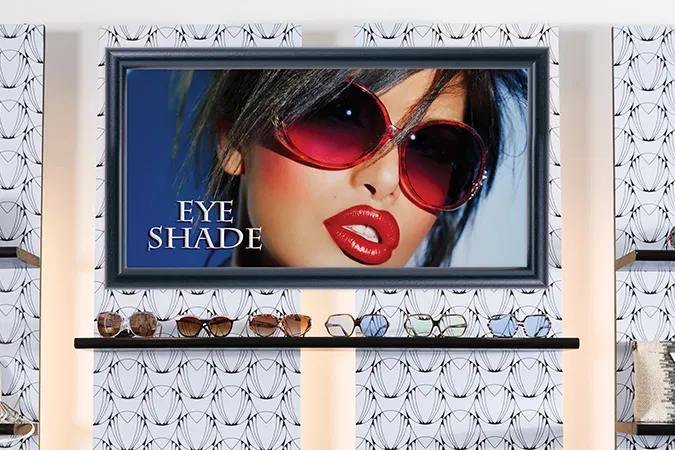
A useful banner starts with its environment: where it will hang, how far away it will be read, how long it must remain in place, and how it will be mounted. Those answers determine whether solid vinyl, mesh, fabric, hems, grommets, pockets, or display hardware make sense.
For trade shows, grand openings, job sites, and Dayton-area events, confirm the installation before designing the artwork. Print Wave can quote custom banners and coordinated trade show displays from the finished size, quantity, material, artwork, and deadline.
Choosing Your Material: Vinyl vs. Mesh
The foundation of a "banner that works" is the material. If you choose a solid vinyl for a windy outdoor event, you’ve essentially built a sail that might pull down your mounting hardware. Conversely, using a mesh banner for an indoor trade show can result in washed-out graphics that lack the "pop" needed to grab attention.
13oz Scrim Vinyl: The All-Rounder
Standard 13oz vinyl is the industry workhorse. It’s a solid, opaque material reinforced with an internal polyester mesh (scrim) for strength. It is commonly used for:
- Indoor Trade Shows: Where you need vibrant color and sharp text for close-up viewing.
- Storefront "Now Open" Signs: Durable enough to withstand standard weather while providing maximum visibility for storefront vinyl campaigns.
- Retractable Banners: Its smooth surface ensures high-resolution graphics look crisp.
Mesh Vinyl: Built for the Wind
If you’re hanging a banner across a fence in Dayton or on a large building facade, mesh is the standard choice. It features thousands of tiny perforations that allow wind to pass through, reducing the load on the banner and the structure it’s attached to. While the colors are slightly less saturated than solid vinyl due to the holes, it’s the only safe choice for large-scale outdoor applications.
Sizing for Impact and Practicality
Size is more than just dimensions; it’s about viewing distance and context. A banner that looks huge in our shop might look like a postage stamp on a 10-foot-high warehouse wall.
- Tabletop & Tablefronts: For a standard 6-foot or 8-foot table, a banner sized to the actual table front can work well. Measure the table and desired drop before production.
- Step and Repeats: If you’re hosting a grand opening or a red-carpet event, you’ll want a minimum of 8’x8’. This ensures your logo is visible behind people of all heights for photos.
- Grand Openings: To be readable from a car moving at 35mph, your custom banners should be at least 3’x8’ or 4’x12’.
For more detailed specs on how materials hold up over time, check out our Print 101 guide on materials and durability.
Mounting and Finishing: Beyond the Grommet
How you hang your banner is just as important as what’s printed on it. We provide proactive quality control to ensure your finishing matches your installation environment.
Hem and Grommets
This is the most common finishing option. We fold the edges (hem) and heat-bond or stitch them to prevent fraying, then punch metal rings (grommets) every 24 inches. This is ideal for zip-tying to fences or screwing into wooden surfaces for real estate yard signs.
Pole Pockets
Instead of grommets, we can create a "pocket" at the top and bottom. This allows you to slide a rigid pole or pipe through the banner, which is essential for:
- Trade Show Backdrops: Hanging from a pipe-and-drape system.
- Avenue/Pole Banners: Common in downtown districts in Columbus and Cincinnati.
- Weighted Displays: Putting a pole in the bottom pocket can help the banner hang more consistently.
Design Tips for Maximum Readability
At Print Wave, we don’t just print files; we make sure they work. When designing for large formats, follow these three rules:
- Test for viewing distance: Letter height depends on distance, speed, contrast, and typeface. Review the banner at an appropriate scale or proof.
- High Contrast is King: White text on a navy background or black text on a yellow background is generally easier to read than low-contrast combinations like grey on white. This is especially true for construction site banners that need to be read from a distance.
- San-Serif for Speed: While script fonts are beautiful, they are difficult to read from a distance. Stick to clean, bold san-serif fonts for your primary message.
Coordinating Your Event Kit
A banner rarely stands alone. For a cohesive brand rollout, your banners should match the rest of your marketing collateral. As a full-service partner, we coordinate the production of your entire kit to ensure color consistency across different materials.
- Apparel: Use our embroidery or apparel printing services for staff shirts that match your banner's brand colors.
- Handouts: Ensure your flyers and business cards use the same high-resolution logos as your large-format signage.
- Supporting Signage: Complement your main banners with yard signs or stickers and decals for directional info or giveaways.

The Print Wave Advantage
Whether you're managing a multi-location rollout across Dayton, Cincinnati, and Columbus or prepping for a single grand opening, timing is everything. We know that if your banners arrive the day after the event, they’re useless.
That’s why we:
- Confirm the production plan: We document the approved material, finishing, proof, and completion date before production.
- Plan Around Your Schedule: We provide a clear scope and timeline up front.
- Handle Local Pickup & Delivery: We serve the entire tri-city region with local logistics.
If you’re ready to start your next campaign, we’re ready to help. From large outdoor signs to detailed booklets and catalogs for your attendees, we handle the complex projects so you can focus on the event itself.
Ready to get started? Contact our team today for a quote on your custom banners and event signage.
Frequently Asked Questions
Should I choose solid vinyl or mesh for an outdoor banner?
Solid vinyl generally provides denser color, while mesh allows more air to pass through. Wind exposure, support structure, viewing distance, and local installation requirements should guide the choice.
How large should banner lettering be?
Letter size depends on viewing distance, speed, contrast, and the typeface. Test the main message at a reduced viewing simulation or full-size proof instead of relying on one universal formula.
What information is needed for a banner quote?
Share the finished size, indoor or outdoor location, expected duration, mounting method, quantity, artwork, and need-by date. Photos of the installation area can also help clarify finishing and hardware.