
November 5, 2026
Custom Booklets and Catalogs: The Complete Printing Guide for Marketing Teams
Excerpt: Custom booklets and catalogs give marketing teams a credible, practical way to explain products, support sales conversations, and keep campaigns on brand. Here’s how to choose the right format, paper, binding, quantity, and timeline. Meta description: Plan better custom booklets printing with this guide to...
By Print Wave
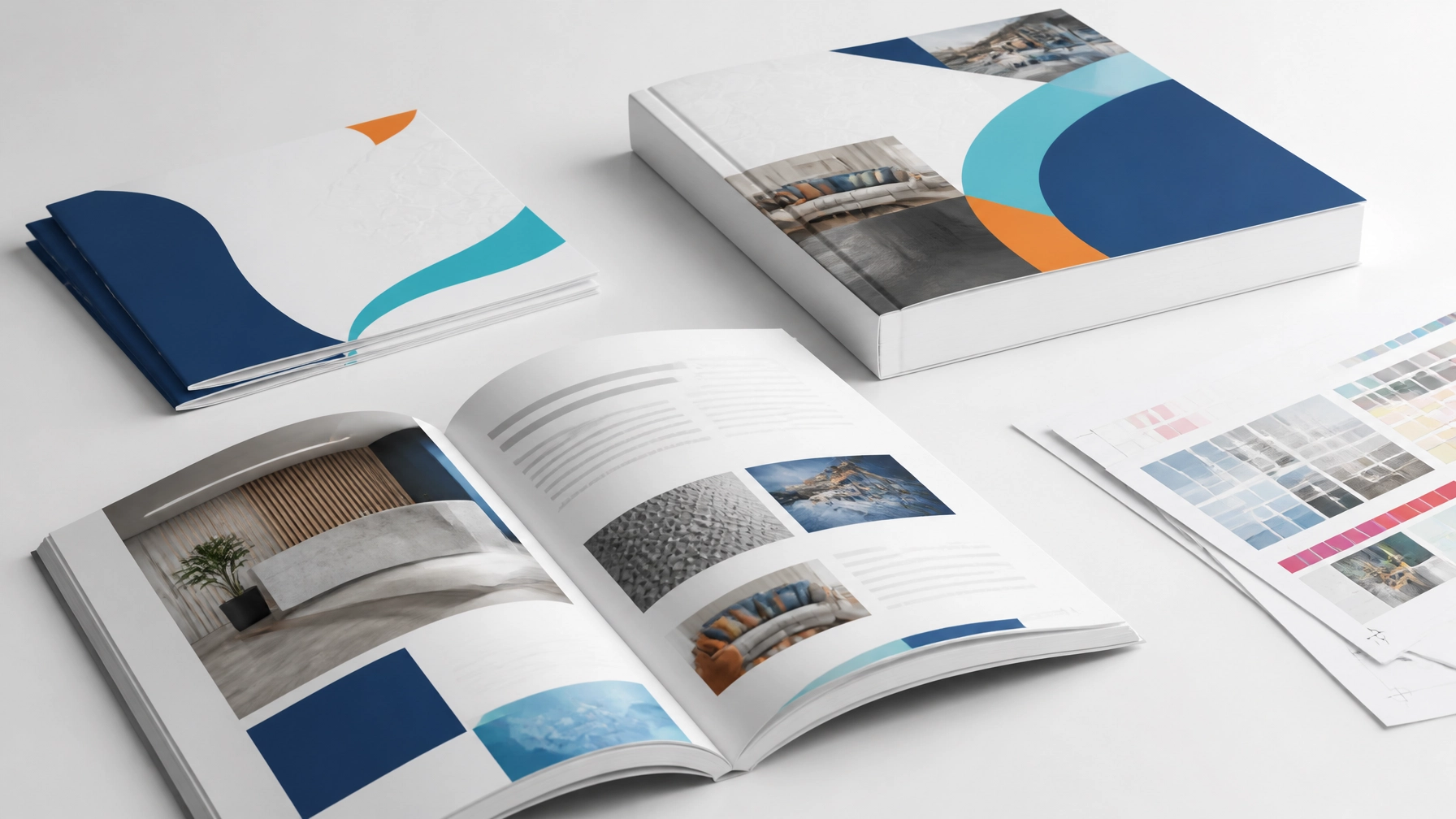
Excerpt: Custom booklets and catalogs give marketing teams a credible, practical way to explain products, support sales conversations, and keep campaigns on brand. Here’s how to choose the right format, paper, binding, quantity, and timeline.
Meta description: Plan better custom booklets printing with this guide to paper, binding, finishing, file preparation, quantity, turnaround, and reliable in-house production.
A well-designed booklet or catalog does more than present information. It gives customers something tangible to review, share, and keep.
For marketing teams, that physical experience can support credibility throughout the buying process. A service booklet can explain complex offerings. A product catalog can help sales teams guide conversations. A company overview can give prospects a clear reason to move forward.
The best results start before anything goes to press. You’ll need to make decisions about format, page count, paper, finishing, quantity, and delivery timing. We’ll walk through the key considerations for custom booklets printing, booklets and catalogs printing, brochure printing, and catalog printing.
Start with the purpose
Before choosing paper or binding, define what the piece needs to do.
A marketing booklet may be used for:
- Service overviews
- Product education
- Sales presentations
- Event and trade show handouts
- Company introductions
- Training or reference materials
- Multi-location brand rollouts
Catalogs usually contain more products, specifications, pricing, or product categories. They may be used by sales representatives, dealers, retail teams, or customers comparing options.
A shorter brochure may be the better choice when the message needs to be quick and focused. Our bifold and trifold brochure printing service works well for concise service summaries, event handouts, and promotional campaigns.
The distribution method matters, too. A catalog used daily by a sales team may need a more durable cover and binding. A short-term event booklet may prioritize speed and cost control.
Choose the right format and binding
Saddle-stitched booklets
Saddle stitching uses folded pages secured with staples along the spine. It’s a practical choice for smaller marketing booklets, programs, and catalogs.
Print Wave supports saddle-stitched booklets from 8 to 64 pages. The total page count must generally be divisible by four because pages are folded and gathered in signatures. Covers count toward the total.
Perfect-bound catalogs
Perfect binding uses adhesive along the spine and a wraparound cover. It creates the appearance of a traditional softcover book.
This option is a strong fit for thicker catalogs, brand books, and publications with enough pages to support a printed spine. Print Wave generally recommends perfect binding for catalogs with 32 or more pages, depending on paper and project specifications.
Spiral and Wire-O binding
Spiral and Wire-O binding allow pages to open flat. These formats are useful for manuals, reference guides, workbooks, and catalogs that need to stay open during use.
Binding affects more than appearance. It also affects page count, spine design, margins, cover setup, and production time. We’ll help you choose the practical option for your content and deadline.

Select paper and finishing with the reader in mind
Paper changes how a publication feels before a customer reads a single page.
For most projects, we recommend a lighter text-weight paper for interior pages and a heavier cover stock for structure and durability. The right combination depends on page count, use, budget, and the type of images or information inside.
Gloss or matte?
Gloss paper can make product photos and color-heavy layouts appear more vibrant. It’s often a good fit for catalogs, lookbooks, and image-driven marketing pieces.
Matte or silk finishes create a softer, more restrained appearance. They can also make text-heavy pages easier to read under bright lights.
For additional protection, cover finishing options may include:
- UV coating
- Matte or gloss lamination
- Embossing
- Foil stamping
- Custom trim sizes
A premium finish should support the purpose of the piece. It shouldn’t distract from the message or push the project beyond its budget.
If you’re considering a specialty effect, our Print 101 guide to foil file setup explains why foil requires its own production layer and file preparation.
Prepare the file correctly
Many booklet problems begin during file preparation. A few simple checks can prevent delays and reprints.
Your final file should include:
- Correct finished size
- All pages in the correct reading order
- Covers and intentional blank pages
- Bleed where artwork reaches the edge
- Safe margins around text and logos
- High-quality images at their effective printed size
- Embedded or outlined fonts
- Print-ready PDF export
For standard commercial print, images are commonly prepared at 300 dpi at final size. Color should also be reviewed for the intended print process. If your artwork was created in RGB, colors may shift when converted for print.
Our Print 101 guide to bleed, trim, and safe area covers the layout zones that help protect important content. You can also review what “print-ready” really means before submitting a final PDF.
If your team designs in Canva, our guide to exporting from Canva for professional printing offers a practical starting point.
We still recommend a page-by-page review before approval. Check product names, prices, contact details, page numbers, image quality, and page order. A digital proof can show layout and content. For color-critical projects, ask whether a physical proof is appropriate.
Plan quantity and turnaround early
Quantity affects both cost per piece and inventory risk.
A larger run may lower the unit cost. However, overprinting can create waste if prices, services, product details, or locations change quickly. Your best quantity depends on shelf life, distribution, reorder frequency, and campaign size.
Print Wave’s typical booklet and catalog production time is 7–10 business days after design approval and receipt of final files. Rush service may be available in approximately 3–5 business days for qualifying projects. The actual timeline depends on page count, quantity, binding, finishing, approval timing, and delivery requirements.
We recommend separating three dates:
- Final artwork approval
- Production completion
- Delivery or local pickup
That makes it easier to build in time for shipping, distribution, and internal handling. If your booklet is supporting a trade show or launch, don’t plan around the event date alone.
Our trade show display printing team can also help coordinate printed booklets with exhibit graphics, backdrops, and booth materials.
Why in-house production helps keep rollouts on track
Outsourcing can add another layer between your team and the finished product. It may make communication, corrections, and deadline changes more difficult.
At Print Wave, we produce complex print projects in-house. That gives us direct control over the process from file review through printing, binding, finishing, inspection, and fulfillment.

Our process is built around:
- Confirming the scope and timeline up front
- Reviewing files and specifications
- Providing proactive quality control
- Communicating if a detail needs attention
- Inspecting finished work before delivery
- Keeping specifications available for reorders
That control matters when a marketing team needs multiple pieces to launch together. A booklet may need to arrive alongside business cards, flyers, postcards, and other campaign materials.
It also matters for national work. We support local projects in the Dayton region, regional rollouts across southwest and central Ohio, and national customers that need repeatable specifications and dependable fulfillment.
Avoid common booklet and catalog mistakes
1. Forgetting the page-count requirement
Saddle-stitched booklets generally need a page count divisible by four. Plan the content early so you’re not forced to add awkward blank pages at the end.
2. Supplying printer spreads
Send single pages in reading order unless your printer specifically requests a different format. The production team handles imposition.
3. Placing content too close to the trim or spine
Keep logos, contact details, and important text inside the safe area. Extra care is needed near folds and bound edges.
4. Using low-resolution images
A photo that looks acceptable on screen may print softly. Review images at their final size before placing them in the layout.
5. Skipping a formal proofing step
Assign one person to approve the final version. That person should check content, pagination, colors, images, trim, and finishing: not just spelling.
6. Waiting until the last minute
A complete file is only one part of the schedule. Binding, finishing, packing, delivery, and distribution all need time.
Build a complete campaign around your booklet
Booklets and catalogs often work best as part of a coordinated brand system.
A real estate team may pair a property catalog with real estate signs, real estate yard signs, and postcards. A contractor may use a service booklet alongside construction site banners and large outdoor signs.
A retail or restaurant rollout may include booklets with window graphics and storefront vinyl, stickers, labels, and decals, and wall graphics. If you’re planning window decals for business locations, consistent artwork and color standards can help every site feel connected.
For broader brand visibility, we also produce vehicle wraps, fleet graphics, and custom banners. That includes commercial vehicle wraps, fleet vehicle graphics, truck lettering, and campaign signage.
If you’re coordinating vehicle wraps in Dayton, Ohio, vehicle wraps in Cincinnati, or a larger regional rollout, the same production discipline applies. For apparel programs, we offer apparel printing and embroidery, including t-shirt printing in Dayton, Ohio.
Work with a dependable print partner
Print Wave produces custom booklets and catalogs from our Centerville facility. We offer local pickup and delivery throughout Dayton, Cincinnati, and Columbus.
You can explore booklets and catalogs in Dayton, booklets and catalogs in Cincinnati, or booklets and catalogs in Columbus.
Whether you need a short marketing booklet, a bound product catalog, or a repeatable national rollout, we’ll help you define the specifications, review the files, and plan the timeline before production begins.
Request a booklet or catalog quote when you’re ready. Share your page count, finished size, quantity, binding preference, paper goals, and desired delivery date. We’ll help you determine the right path without adding unnecessary complexity.